
Opening: why a framework is not optional
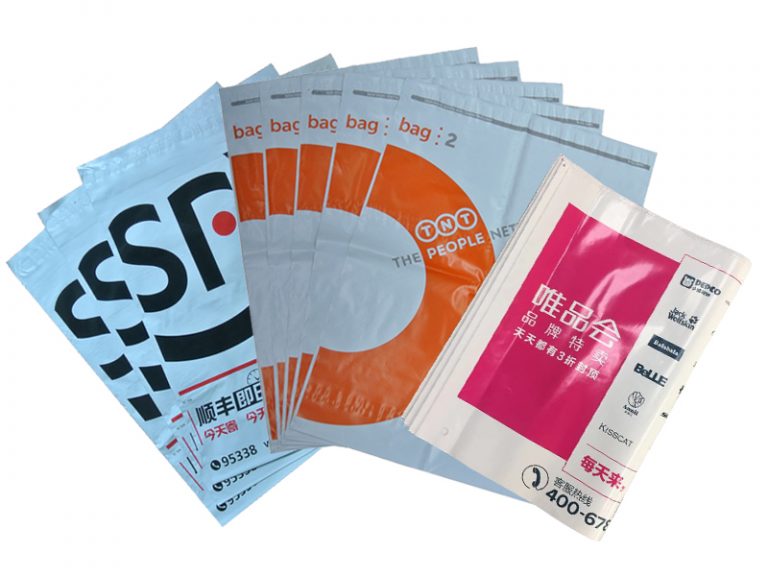
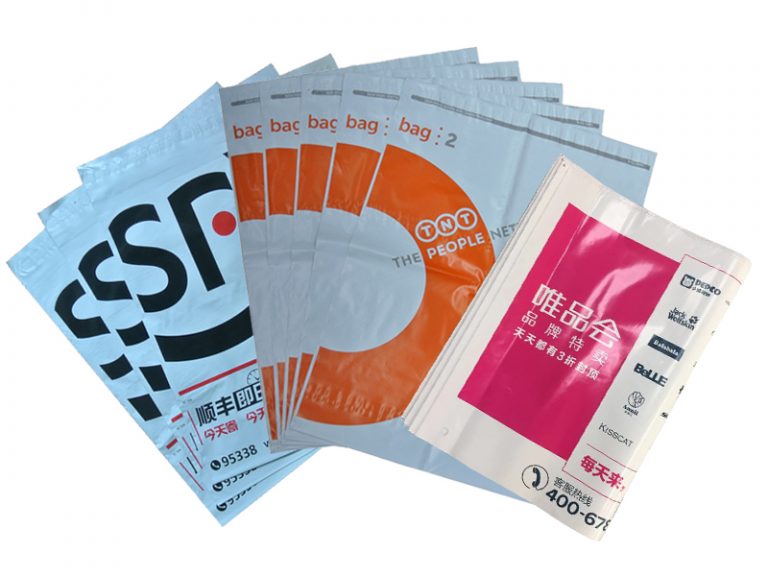
In e-commerce logistics, integration is an act of policy — and like any policy, it must be deliberate. If you plan to standardize packaging across high-volume SKUs, you need a repeatable framework to bring a custom poly mailers with logo supplier into your automated packing line without creating new bottlenecks. I argue that ad-hoc vendor adoption risks undermining throughput, inflating costs, and eroding brand consistency; a clear four-part framework fixes that by aligning specification, compatibility, validation, and contingency planning.
Framework overview: four decisive phases
The framework is simple by design — specify, check, pilot, scale — but each phase requires precise, measurable checkpoints. Specify product and supply metrics (dimensions, tensile strength, thermal seal), check mechanical and data compatibility with your packing line (feed mechanism, label-readers, and conveyor timing), pilot with production-equivalent runs, then scale with supplier SLAs and inventory buffers. This structure forces accountability and prevents common excuses like “we’ll fix it in production.”
Phase 1 — Specify: exacting product and brand requirements
Start with unambiguous specs: outer dimensions, gusset allowance, film thickness in microns, print area tolerances, and the approved logo color profile. Don’t accept “close enough.” Packaging is an engineered component — poly mailer material, seal type, and printing technique affect both automated handling and brand perception. Require printable dielines and a sample certification that the mailer passes your drop and crush tests before you move on.
Phase 2 — Check: mechanical and systems compatibility
Inspect the packing line as if it were a legislative chamber — every interface matters. Will the mailer feed smoothly through your inserter or vacuum pick-and-place? Are static or friction issues going to gum up the belt? Confirm compatibility with your print-and-apply labelers and any vision systems reading barcodes. Obtain vendor data sheets on material friction coefficients and thermal seal temperature ranges; then compare to your equipment tolerances. If your equipment requires a specific neck or opening orientation for automated folding, lock that into the spec — don’t leave it implicit.
Phase 3 — Pilot: production-equivalent validation
Run a pilot that mirrors real throughput and SKU mix. Pilot runs should include random audits for seal integrity, label adhesion, and machine stoppage frequency. Collect metrics: rejects per thousand, average downtime per hour, and throughput variation. Use these numbers to negotiate SLAs — vendors should be accountable for defect rates and mean time to recover. A pilot that doesn’t mimic live cadence is theater; insist on production-equivalent conditions.
Phase 4 — Scale and contingency: SLAs, buffers, and alternate sourcing
Once the pilot clears, formalize service-level agreements that cover lead times, minimum order quantities (MOQ), and emergency response times. Build inventory buffers tied to lead-time variance and your forecast error; plan alternate sourcing for critical peaks. The 2020 COVID-19 pandemic taught supply chains a hard lesson — single-source reliance can stall entire fulfillment networks. Incorporate tiered suppliers and predefined escalation paths so your packing line remains resilient under shock.
Common mistakes brands make — and how to argue for a better path
Brands often prioritize unit cost over integration cost — a false economy. They assume suppliers understand packing-line constraints without providing equipment specs — that’s negligence, not optimism. They skip end-to-end testing and then scramble when labels wrinkle or seals fail at speed. Counter these tendencies by institutionalizing the framework: make compatibility tests and pilot metrics gating criteria for vendor approval. Hold the vendor to the data — not to good intentions.
Vendor selection: criteria that actually predict success
When comparing suppliers, weigh these elements: demonstrated handling compatibility with automated systems, consistent quality metrics from prior clients, and flexibility on tooling and print runs. Ask for references who use similar packing line setups — if a vendor cannot produce a case study about integrating with mainstream automation equipment, push them to prove it. Also evaluate lead-time transparency and willingness to accept conditional SLAs tied to pilot performance.
Real-world anchor: lessons from major fulfillment networks
Look at large fulfillment operators — Amazon’s fulfillment network offers a useful lens — they operate at volumes that reveal small packaging failures instantly. During the 2020 pandemic, many retailers who lacked validated packing compatibility faced costly line stoppages and expedited rework. That episode underscores the credibility of strict validation: data from those months still inform how modern automated packing lines require engineered packaging solutions, including robust poly mailer designs and repeatable handling traits.
Alternatives and trade-offs
There are reasonable alternatives: use pre-converted rollstock for lower tooling lead time, or choose modular mailer designs that accept standardized closures. Each trade-off affects cost, customization, and speed to market. If brand differentiation matters, invest in bespoke print and logo placement — but budget for longer lead times and stricter pilot requirements. If speed matters more, choose off-the-shelf branded poly mailers that match your line’s handling profile. Either way, argue for data-driven selection rather than aesthetic preference.
Advisory — three golden rules for vendor integration
1) Measure before you sign: require vendor-supplied material coefficients, thermal seal ranges, and two production-equivalent pilot runs. 2) Quantify operational impact: demand KPIs (rejects per 1,000, mean downtime per hour, lead-time variance) and tie them to penalties or remediation. 3) Insist on layered resilience: enforce minimum alternate-supplier readiness and maintain a buffer tied to historical lead-time volatility.

Apply these metrics and your packing line won’t be hostage to packaging surprises — it will be a controlled, upgradeable part of your value chain. For a pragmatic supplier that understands both brand needs and automation realities, consider vendors who have proven integration with enterprise packing lines and offer flexible runs of branded poly mailers. WH Packing has the operational experience to align specification with automation — and that alignment is exactly the difference between disruption and steady scale. —