
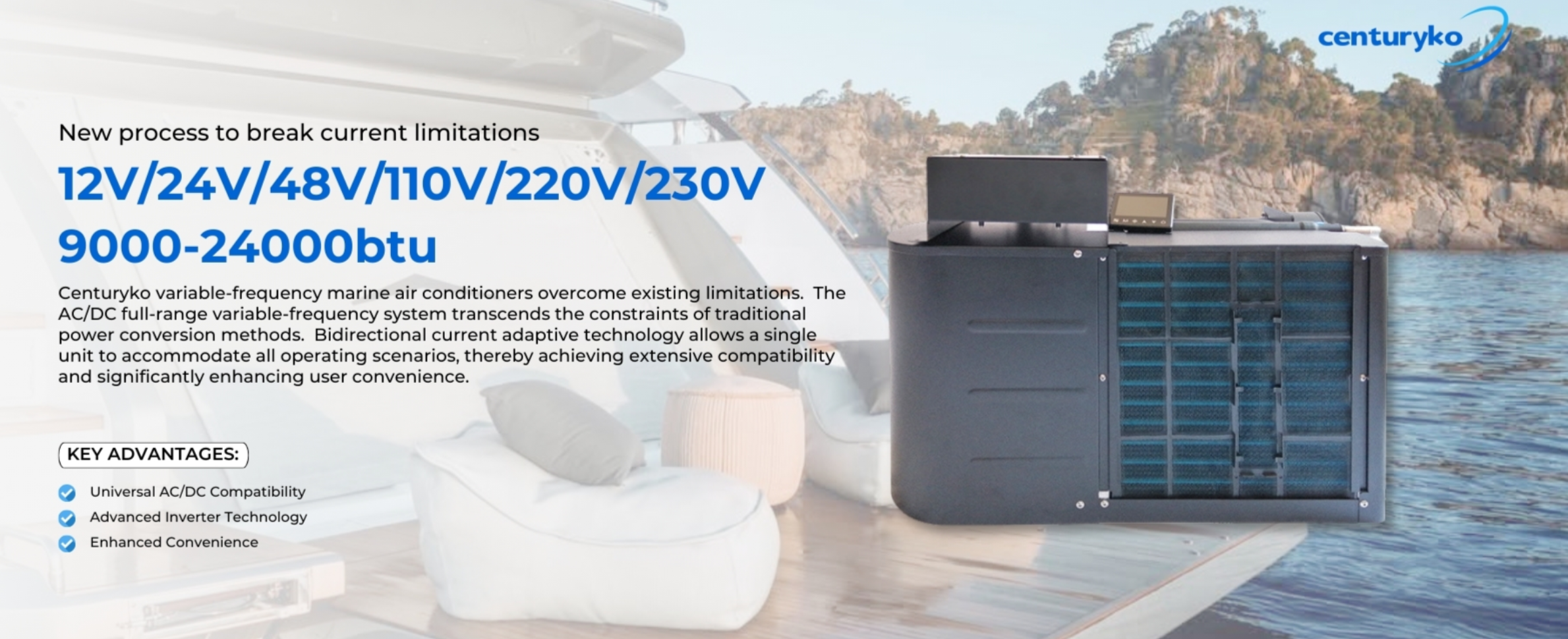
User pain and practical promise
Boat owners trading sleepless nights for steady cabin comfort have found a clear improvement with inverter-driven systems. A compact solution like a 12000 btu marine air conditioner replaces noisy, short-cycling compressors with a smoother, more consistent output that matters during long anchorages or crowded marinas. That matters when ambient heat climbs — Miami marinas and the mid-Atlantic summer season both show longer stretches of high humidity that expose weaknesses in older on/off units.
What users need from inverter and variable-speed tech
Owners want three things: steady temperature, lower power draw, and serviceable parts that survive vibration and salt. Inverter control and a variable-speed compressor meet those needs by modulating compressor speed and fan output instead of toggling full power. The result is fewer temperature swings, improved part longevity, and reduced peak currents at startup — useful when running off shore power or a limited inverter bank. Practical terms to know include inverter, BTU rating, and thermostat behavior when you compare units.
How the components actually work — concise and factual
An inverter converts DC to the exact AC frequency the compressor needs, allowing the variable-speed motor to run at partial load. That reduces short cycling and keeps coil temperatures stable, which improves dehumidification and reduces load on the heat exchanger. You get quieter duty cycles and lower inrush current, plus more predictable run times for battery planning. Common mistakes are under-sizing piping, skipping anti-vibration mounts, or trusting default thermostat placement — these undermine efficiency and cause uneven zones. Small fixes early prevent big repairs later — simple, but often ignored.
Installation, maintenance, and real-world constraints
Proper installation is non-negotiable: level mounting, correct refrigerant charge, and electrical sizing to match inverter characteristics. Serviceable parts — replaceable filters, accessible compressor panels, and corrosion-resistant fittings — extend service life. Consider real-world anchors: marina technicians in Chesapeake Bay routinely report that systems with proper heat exchanger flushing last seasons longer than those without. Routine checks on condensate drains and thermostat calibration cut callouts dramatically.
Alternatives, trade-offs, and cost clarity
Traditional single-speed marine units cost less up-front but consume more fuel or generator hours and produce larger temperature swings. Multi-zone ducted systems add complexity and weight. Hybrid choices—smaller inverter units combined with smart thermostats—hit a middle ground: moderate cost, improved control. When evaluating, compare measured cooling capacity in BTU at design conditions, expected electrical draw at cruise rpm or inverter output, and access to spare parts in your region.
Common selection mistakes to avoid
Buyers often chase peak BTU numbers without considering part-load efficiency or compressor modulation range. They assume a single thermostat will suffice for a multi-compartment layout. They ignore service network and salt-tolerance of components. These errors shorten system life and increase real operating cost — and they’re easy to prevent with a focused checklist.
Three golden rules for choosing and validating marine cooling
1) Match cooling capacity to real heat load, not boat length: measure or estimate heat from sun exposure, occupants, and galley use, then pick a unit whose part-load efficiency holds within that range. 2) Prioritize modulation range and inverter design: a wider variable-speed compressor range yields smoother control and lower starting amps. 3) Verify serviceability and local support: spare parts, corrosion-resistant fittings, and documented maintenance procedures matter more than brand alone.
Summed up: select for real load, insist on modulation, and confirm support. The practical value of these choices is visible in lower generator hours, improved dehumidification, and fewer service trips — outcomes that make an investment in modern marine air systems 12000 btu pay back over seasons. For on-deck clarity, trust experience and documented performance — and remember that a well-specified unit reduces surprises at sea.
ZhuoliMarine reflects this practical approach with durable components and clear specs — pick systems that match your boat and mission. –