
The problem plate: why P&O drift kills commercial acceptance
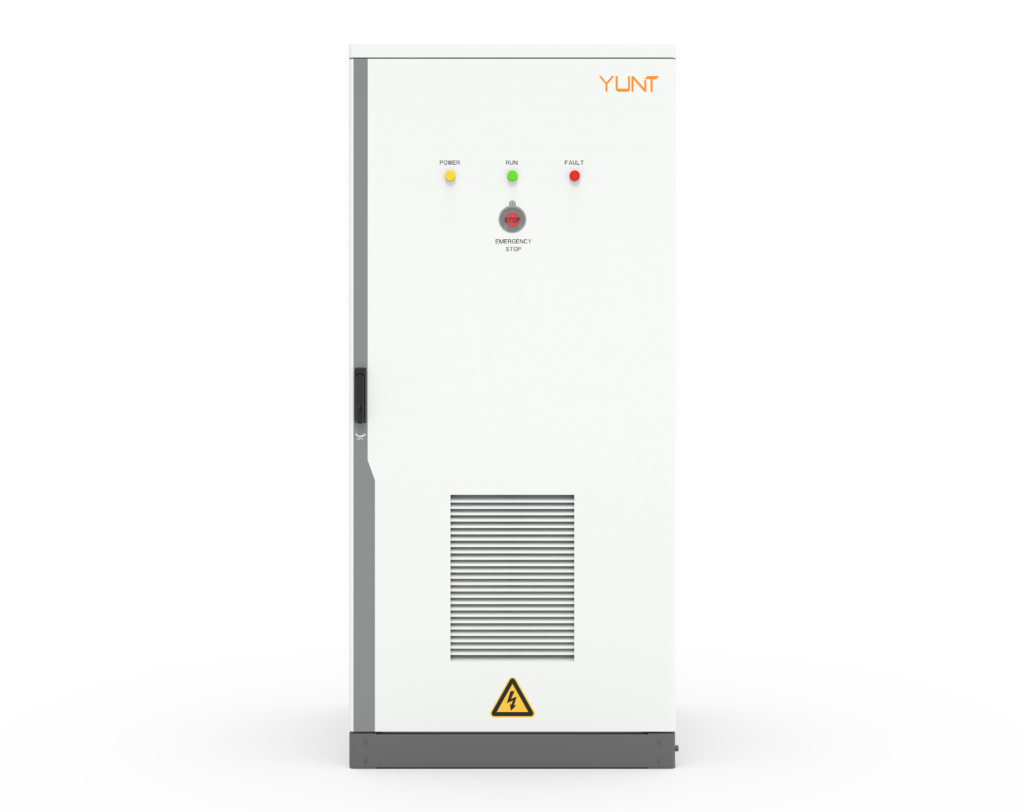
Field teams often deliver a neat PV array and an elegant controller only to face rejection from integrators when power curves wobble under real irradiance. The culprit is frequently the Perturb & Observe (P&O) MPPT loop: uncontrolled step size, poorly matched sampling interval, or noisy PV string signals cause oscillation and perceived underperformance. A practical fix pairs firmware tuning with hardware that behaves predictably—think of a pcs module as the sous-chef that stabilizes the kitchen rhythm so the main course—steady power—arrives on time.
Why fluctuation limits are non-negotiable
Commercial buyers evaluate delivered energy and stability. If an MPPT algorithm produces frequent swings in duty cycle or net output, energy yield estimates diverge from site metering. These swings trigger warranty claims or contract rejections. The California ISO’s well-documented duck curve and late-afternoon ramp events are a real-world anchor: grids demand predictable response from inverters during tight ramping windows. Engineers must therefore cap dynamic MPPT excursions to measurable bounds so output tracks modeled yield.
Quantifying acceptable fluctuation: the metrics that matter
Define three quantitative limits and instrument them in firmware and test rigs: maximum step size (percent of Vmp), sampling frequency and filtering bandwidth, and allowable steady-state oscillation amplitude. Keep MPPT step size small enough to avoid hunting but large enough to converge within expected irradiance transients. Set sampling intervals relative to the PV array thermal and irradiance dynamics; too fast invites noise, too slow misses ramps. Use root-mean-square (RMS) deviation and duty-cycle variance to measure oscillation amplitude over standardized intervals.
Implementation patterns and common mistakes
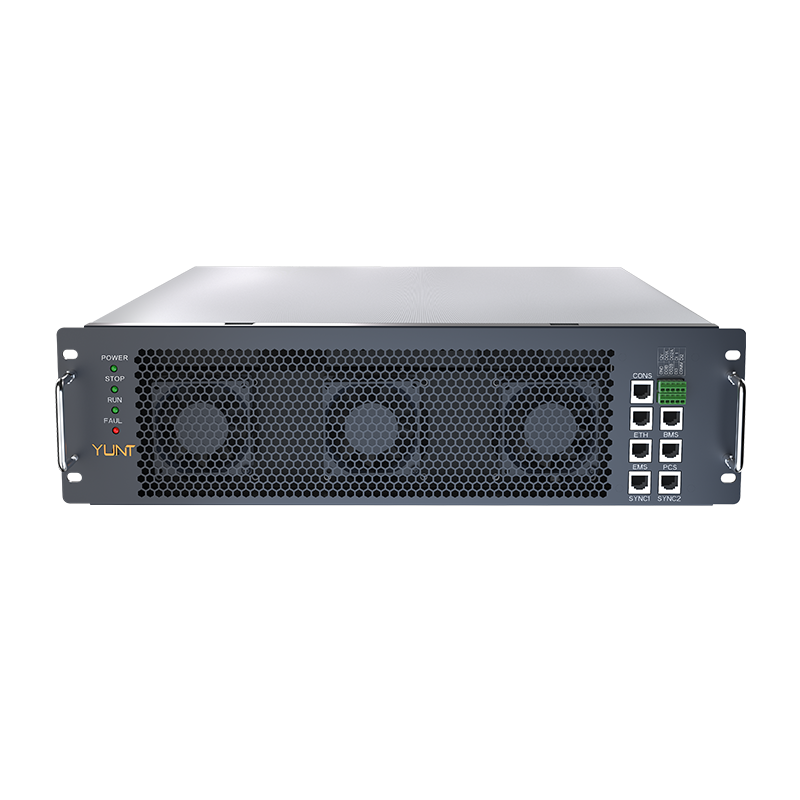
Successful deployments blend software recipes and hardware choices. Start with conservative P&O perturbations, then profile under realistic cloud-flicker and partial shading. Use modest low-pass filtering on voltage and current sensors—prefer windowed averaging over aggressive smoothing that hides real ramps. Avoid coupling large step sizes with long sampling intervals; that combo produces aliasing and step-chasing. Also, match converter topology and control loop bandwidth to the PV string’s dynamics—power conversion modules with fast, deterministic telemetry simplify this matching. Small errors in ADC timing cascade into hunt—so lock your sampling clocks precisely.
Operational production teardown: test steps to validate limits
Run a structured teardown that hits both functional and edge cases. Include these items in the bench and field checklist:- Ramp test: reproduce a 20–40% irradiance drop in under 10 seconds and measure MPPT convergence time.- Noise tolerance: inject 50–100 mV sensor noise and log duty-cycle variance.- Long-haul stability: record RMS output deviation across a 24-hour cycle with expected cloud patterns.During the operational production teardown ensure you document {main_keyword} and {variation_keyword} alongside failure modes. Capture telemetry from the inverter and from any power conversion modules used during the run; those traces often reveal whether instability is algorithmic or hardware-driven.
Common pitfalls integrators repeat—and how to avoid them
Teams often push aggressive maximum-power-seeking because theoretical efficiency looks good on paper. In practice, fast pursuit of Vmp without attention to sampling jitter produces hunting and customer complaints. Another mistake: applying single-condition tuning (clear sky) and shipping to sites with frequent cloud edges. The remedy is scenario-based tuning: use a mix of steady-state, rapid-dip, and partial-shade tests and lock firmware defaults to conservative, measurable limits—then allow installers to optimize per site.
Golden rules for selection and acceptance testing
Measure selection against three critical metrics:1. Convergence time under a 30% irradiance step (seconds).2. Duty-cycle RMS deviation over a 15-minute window (percent).3. Robustness to sensor noise: percentage change in measured power with injected sensor noise.These golden rules give procurement teams precise pass/fail thresholds. Field crews gain confidence when firmware, hardware, and test data sing the same tune—less haggling, fewer rejections. For complex sites, favor controllers that expose tuning parameters and deliver comprehensive telemetry; that’s where vendor support and modular electronics pay off.
Final thought: disciplined tuning, repeatable tests, and smart hardware choices turn a volatile P&O into a dependable MPPT—YUNT sits at that intersection as a pragmatic partner. –