

A Quiet Stop at Dusk, and the Road Feels New
You roll off the highway, the day still warm, the horizon blushing. The 120kw EV charger waits under a soft lamp, steady as a harbor light. In fifteen to twenty minutes, you could add well over a hundred miles; in many models, an 80% charge lands in about half an hour, depending on pack chemistry and thermal limits. Yet the minutes stretch or snap, based on curve shape, cable cooling, and how the grid breathes at that hour (small details, big feelings). So why do some fast stops feel like a breeze, while others drag?
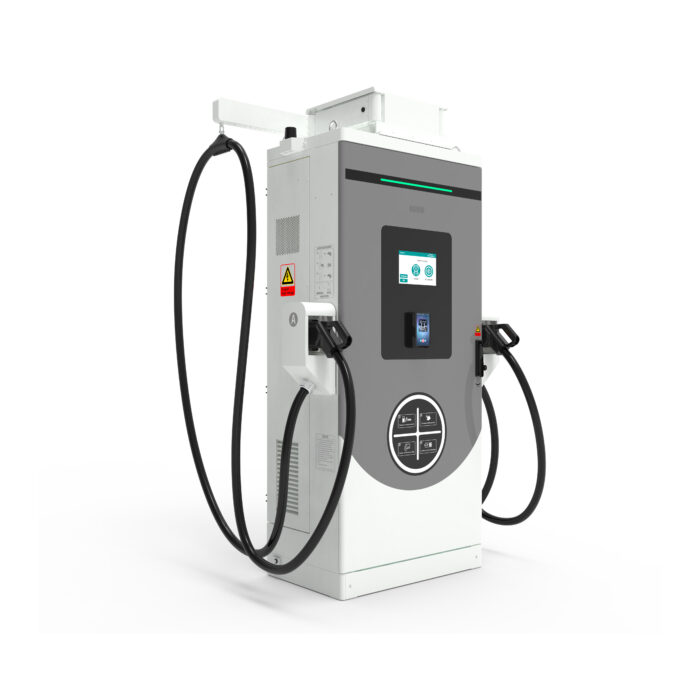
Here’s the gentle truth: the experience is not only about raw kilowatts. It’s about how power arrives, how the charger listens to the car, and how the station responds when the line gets long. We’ll explore the quiet mechanics—and the quiet frustrations—behind the numbers, and how mid-power systems stand apart. Onward, into the heart of fast charging.
The Hidden Friction Behind “Fast”: What We Don’t See
Why do faster stations feel slow?
Earlier, we pictured that easy dusk stop. Now, let’s get specific. Systems like the 160kw DC EC charger promise headroom, but the real difference shows up in the charging curve, not just the peak. Traditional cabinets often share power and throttle when a second vehicle plugs in; the result is uneven delivery, then a late ramp that looks fine on paper but feels slow on site—funny how that works, right? Add in thermal derating on hot days and you get micro-delays that stack. Look, it’s simpler than you think: consistency beats a flashy spike.
Much of the friction hides in handshakes and heat. Legacy power converters react slowly to state-of-charge changes, and older control loops can overshoot or pause, nudging the session into tiny stalls. If the cable isn’t liquid-cooled, the system may trim amperage to protect connectors. Network layers can add seconds with each OCPP message. Even small harmonic distortion on a busy feeder can trip conservative protections. Together, these “safe” choices blunt the feel of fast. The promise of faster is real, but without tight thermal management, smarter load balancing, and clean communications, the minutes don’t melt. They thicken.
From Faster to Smarter: The Mid-Power Future That Feels Quick
What’s Next
The next step isn’t only more kilowatts; it’s better control. Think of mid-power fast charging as orchestration. A well-tuned 120 kW lane that holds steady power at higher states of charge can beat a jumpy 150 kW unit that keeps trimming and ramping. Here’s where new principles matter: faster control loops on the DC bus, tighter thermal envelopes, and adaptive power factor correction that keeps the grid calm. A station like the 120kw DC charger 40 can feel “quicker” because the power is predictable. That steadiness shortens perceived wait time—and actual wait time—under load.

We’re also seeing edge computing nodes at the cabinet, which anticipate vehicle requests via real-time profiling, and then pre-stage the rectifier to reduce handshake lag. SiC MOSFET stages cut switching losses, so the unit holds output longer before hitting thermal limits. Add liquid-cooled cables and smarter isolation monitoring, and you reduce those tiny stalls that steal minutes. The result? Fewer dips, fewer pauses, and a session that feels smooth. And when a second car arrives, the cabinet’s load-balancing math now prioritizes curve integrity, not just fairness. Small moves, big gains—funny how that works, right?
Before you pick your next site or upgrade a lane, use three simple metrics to stay honest. One: sustained kW at high state-of-charge (70–85%) with ambient heat; check for thermal derating curves, not just peak ratings. Two: grid behavior—verify power factor, total harmonic distortion under load, and how the unit responds to feeder sag. Three: software resilience—look for OCPP compliance, session success rate, and FOTA capability for rapid fixes. If these score well, the rest usually follows. Quiet power wins. And your drivers will feel it, not read it. Learn more at winline EV charger.