
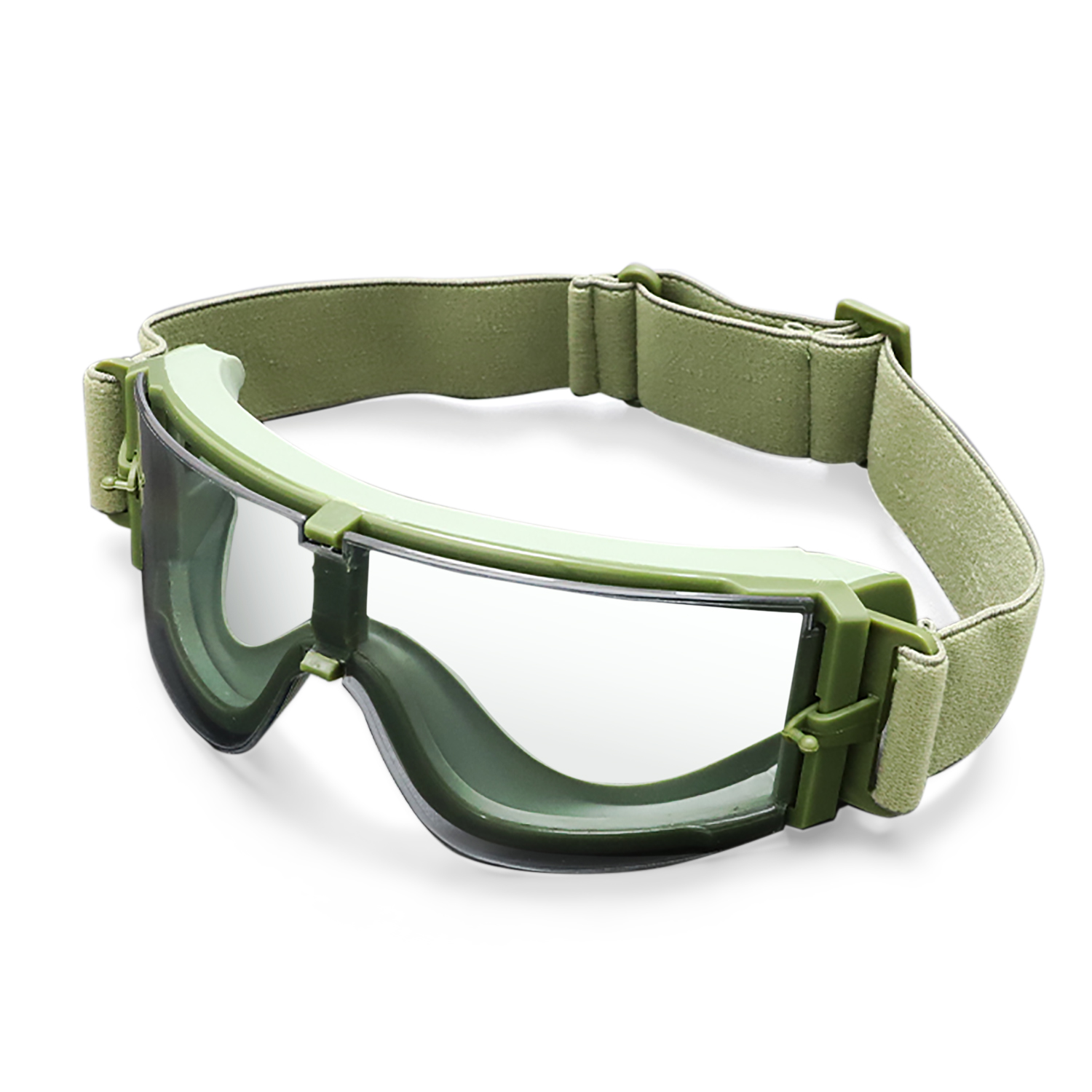
Comparative lead — why the trade-off matters
Field commanders and procurement officers routinely weigh two competing demands: unambiguous visual acuity and consistent anti-fog performance. This comparative analysis examines how prescription RX inserts interact with anti-fog systems in military specifications, and how those design choices differ from commercial tactical goggles. Operational feedback from deployments in Afghanistan and Iraq remains a real-world anchor: reports from those theatres repeatedly flagged fogging during intense activity and compromised sightlines when prescription corrections were improvised.
Core technical tensions: optics versus microclimate control
At the heart of the issue are two engineering domains. Optical correctness demands precise lens curvature, correct optical axis alignment and, occasionally, prism compensation for individual eyes. Anti-fog strategies rely on microclimate control: airflow channels, foam gaskets, and surface treatments such as anti-fog coatings or dual-pane construction. The two interact—an insert that shifts the optical axis by a few millimetres can force the wearer to alter head posture, thereby changing airflow and increasing condensation risk.
Prescription insert architectures compared
There are broadly three insert approaches, each with distinct consequences for anti-fog behaviour:
- Clip-in plano inserts: Simple, lightweight, and economical. They sit close to the face and often preserve original goggles’ seals, but they offer limited diopter range and may introduce minor misalignments.
- Frame-mounted prescription cartridges: More rigid and optically precise. These better control lens curvature and axis, but they increase internal chamber volume and can alter internal airflow unless the gaskets are reworked.
- Custom-moulded inserts: Tailored to a shooter’s interpupillary distance and prescription. Highest optical performance; they demand careful integration with ventilation and anti-fog coatings to prevent trade-offs.
Materials and coatings that matter
Anti-fog coatings fall into two camps: hydrophilic layers that spread moisture and hydrophobic treatments that minimise droplet adherence. For prescription inserts, hydrophilic coatings on the inner surface often perform better because they prevent discrete droplets from forming on the correction plane. Lens material—polycarbonate versus Trivex—also affects thermal conductivity and condensation behaviour; polycarbonate is lighter but warms differently, which can influence fog onset.
Common integration mistakes and practical corrections
Many field modifications prioritise expedience over systems thinking. Typical errors include improper seating of inserts, neglecting the foam gasket compression, or pairing high-diopter inserts with insufficiently vented goggles. The remedy is straightforward: validate optical axis alignment, verify gasket compression under helmet interaction, and prefer dual-pane or vented solutions where sustained exertion is expected — simple but often overlooked.
Civilian crossover: lessons for shooting eyewear
Civilians choosing prescription protection for competitive or recreational shooting face similar trade-offs. Modern shooting eyewear often borrows military-grade anti-fog systems but prioritises ease of prescription accommodation. Gamified examples aside, the best civilian designs adopt modular inserts, anti-fog surface chemistry, and passive vents to reduce maintenance and maximise field clarity.
Summarised comparative insights
Prescription inserts are not interchangeable components; their selection must reflect the performance envelope required. Military systems emphasise robustness and seal integrity, whereas civilian designs favour modularity and user serviceability. Both sectors benefit from careful control of optical axis, judicious choice of coatings, and attention to gasket behaviour — put together, these factors determine real-world clarity and fog resistance.
Advisory — three golden metrics for selection
Evaluate systems against these critical metrics before adoption:
- Optical axis deviation: Measure the insert’s alignment in millimetres relative to the user’s interpupillary distance; acceptable deviation should be minimal to avoid compensatory head tilt.
- Seal integrity under load: Test gasket compression while wearing helmets and comms; a compromised seal predicts fogging during exertion.
- Anti-fog longevity: Confirm whether the coating or dual-pane design maintains performance over repeated humidity cycles and cleaning routines.
These metrics deliver tangible decision criteria for procurement or personal purchases, and they map directly to reduced downtime and clearer sightlines.
For practical solutions that combine optical precision with reliable anti-fog measures, consider designs that treat the insert and the goggle as a single engineered system — that is where value resides, and where YIJIA Optical positions its offerings. —