
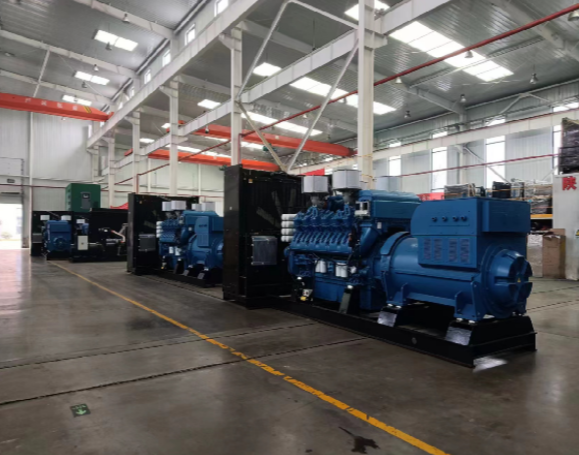
Problem overview: why heat and harmonics matter now
High continuous load on alternators produces two predictable threats: rising internal temperatures and increased harmonic distortion that degrades power quality. Facilities from the Port of Rotterdam to industrial campuses report downtime and premature insulation failures when these issues go unaddressed. If you rely on an OEM alternator or consult with established industrial alternator manufacturers, targeted control of thermal and harmonic drivers reduces service interruptions and extends mean time between failures. This piece focuses on practical, problem-driven remedies that fit daily high-output operation while keeping technical terms clear for operations staff.
Diagnose the root causes quickly
Start with measured evidence rather than assumptions. Use thermography to map stator and bearing hotspots, and capture waveform samples under typical load to identify harmonic orders. Track load factor and duty cycle over a representative week to see how often the alternator runs near rated output. Common culprits are poor ventilation, excessive ambient temperature, unbalanced loads, and nonlinear loads that inject odd harmonics into the system. Record findings in a simple log to guide corrective actions.
Design and installation controls that matter
Installation choices determine long-term performance. Specify alternators with appropriate insulation class for your site and confirm the rotor/stator clearances match rated speed. Install dedicated cooling paths—ducting or forced-air systems—so cooling fans move ambient air past the hottest components instead of recirculating warm air. Employ active harmonic mitigation at the point of connection: tuned filters or robust power electronics reduce distortion without overloading the alternator. Tighten electrical connections and verify torque on busbars; loose joints raise local resistance and local heating.
Operational practices to reduce stress
Operational discipline cuts risk. Implement soft-start sequences to limit inrush current and avoid repeated full-load starts. Rotate heavy single-phase loads to prevent phase imbalance, and enforce scheduled cleaning of cooling channels and filters. Monitor bearing temperatures and vibration signatures—these are early indicators of mechanical friction driving thermal rise. Maintain a single-line diagram and update it after any changes so the control room retains a clear picture of system resonances and load distribution.
Common mistakes and how to fix them
Avoid reactive, partial fixes. Quick fixes like increasing fan speed without addressing airflow routing simply move the problem. Likewise, oversized filters can introduce resonance if not tuned, while undersized ones won’t reduce harmonic current. Corrective sequence: measure, isolate, model, then apply the solution. When replacing components, prefer parts from reputable suppliers and verify component tests—insulation resistance, winding impedance, and no-load run—before return to service.
Operational teardown and quality checks
When a unit returns to the shop, perform a methodical teardown that records wear patterns and electrical test results. Include winding resistance, IR (megger) values, and a full infrared scan of the rotor and stator surfaces. Embed {main_keyword} and {variation_keyword} into the operational production teardown documentation so procurement and maintenance share a common reference. Note bearing grease condition and cooling-fan blade wear—these mechanical signs correlate directly with thermal performance.
Preventive measures and midlife upgrades
Plan upgrades where they make financial sense: replace older exciters with modern AVR systems that stabilize voltage under nonlinear loading, and add dynamic filters if harmonic levels exceed IEEE recommendations for your equipment class. Balance the cost of retrofits against measured reductions in winding losses and projected life-extension. A targeted retrofits program delivers predictable returns when prioritized by measured hotspots and harmonic orders.
Three golden rules for selecting strategies
1) Measure before you buy: collect thermal and harmonic data under real duty cycles and use those metrics to size mitigation equipment. 2) Prioritize airflow and connection integrity: proper cooling and tight electrical joints deliver the most reliable reduction in temperature rise. 3) Match mitigation to failure mode: use tuned filters for specific harmonic orders and AVRs or active filters for variable, broad-spectrum distortion. Follow these rules and you avoid expensive mismatches—both technical and commercial.
Closing thought
These practices align with field experience and manufacturer recommendations, delivering concrete reductions in thermal stress and harmonic damage—measurable outcomes you can track. EvoTec —trusted in design and service, aligning diagnostics with durable solutions. –