
Opening: untangling a few persistent tales
Many speak of isolongifolene as if it is a single, immutable aroma — but that’s a story worth correcting. In the fragrance and flavour trade, isolongifolene is treated as a sesquiterpene with uses as a fragrance note and intermediate, yet myths about its purity, scent stability, and interchangeability with other terpenes persist. Practical evaluation uses tools like GC‑MS to read the molecule’s story; likewise, age‑old practices such as traditional distilling turpentine remind us that raw‑material history affects modern expectations. The point here is simple: don’t confuse name with specification — chemistry and supply context decide performance.
Myths worth busting
Below are common misconceptions and the concise reality behind each.
- Myth: All isolongifolene samples smell and behave the same.
Reality: Isomeric composition and trace impurities shift aroma and fixation; optical activity and minor isomers change perception. - Myth: “Natural” equals superior for stability.
Reality: Natural extracts may contain oxidizable terpenes that reduce shelf‑life; properly stabilized synthetic batches can outperform them in industrial settings. - Myth: High GC‑MS purity alone guarantees performance.
Reality: GC‑MS tells composition but not necessarily sensory interaction or long‑term oxidative stability — complementary assays and real‑world trials matter.
The chemistry in plain rhythm
Isolongifolene is a tricyclic sesquiterpene framework — compact, woody, and often used as a low‑volatility fixative or synthetic intermediate. Key technical touchpoints for procurement and formulation include isomerization tendencies, refractive index ranges, and typical boiling behavior under reduced pressure. Analytical checks usually combine GC‑MS for component profiling with simple stability tests (heat and light exposure). In formulation, expect isolongifolene to reduce volatility of brighter top notes and to interact subtly with musk‑like or resinous accords.
Real‑world anchor: why history still matters
Centuries of naval stores activity in the southeastern United States created empiric knowledge about pine resins and turpentines — a lineage that informs modern distillation choices. Producers who historically distilled turpentine learned which feedstocks and distillation cuts yielded stable sesquiterpenes; those lessons inform today’s sourcing when manufacturers choose between different pine fractions or synthetic routes. This historical context is a useful anchor when evaluating supplier claims about origin, yield, and expected impurity profiles.
Quality control and practical tests
When you assess a batch, combine analytical and sensory checkpoints:
- GC‑MS profile: identify major isomers and detect common oxidized byproducts.
- Sensory panel: short and extended sniffing trials to capture top, heart, and base behaviour.
- Accelerated stability: heat/light exposure to estimate shelf‑life and brown‑out risk.
Also request documentation on solvent residues, supplier traceability, and storage history. This is not glamour work — but it saves formulation headaches later.
Common mistakes formulators make — and how to avoid them
Avoid these recurring errors. First, trusting only a single purity number. GC‑MS purity does not always reflect olfactive purity; minor stereoisomers can change a finished scent. Second, neglecting compatibility tests: the molecule’s low volatility can alter release profiles when mixed with ester‑rich top notes. Third, poor storage assumptions: heat and light accelerate isomerization and oxidation. — Practical fix: insist on a small pilot blend and a 30‑day accelerated test before scale production.
Alternatives and when to consider them
If isolongifolene’s attributes don’t match your brief, consider alternatives by functional role rather than name. For base fixative effect, other sesquiterpenes or synthesized fixatives may deliver similar reduction in volatility. If you need a woody resinous heart with higher oxidative stability, look to chemically stabilized isolates or blended fractions with known antioxidant treatment. Cost, sensory profile, and supply continuity should guide substitution decisions.
Procurement checklist for sourcing isolates
Use this quick list when evaluating vendors:
- Certificate of Analysis with GC‑MS chromatogram and quantification of major isomers.
- Stability data or at least documented storage recommendations (temperature, light protection, antioxidants used).
- Traceability: origin of feedstock or synthesis route and a declaration on residual solvents.
Three golden rules for industrial use and selection
1) Demand multi‑layered proof: require analytical data (GC‑MS), sensory validation, and a small‑scale stability trial before approval. 2) Evaluate total cost of use: include potential rework, headspace losses, and storage overhead when comparing unit prices. 3) Prioritize supplier transparency and technical support — a partner who shares batch records and suggests formulation tweaks reduces downstream risk.
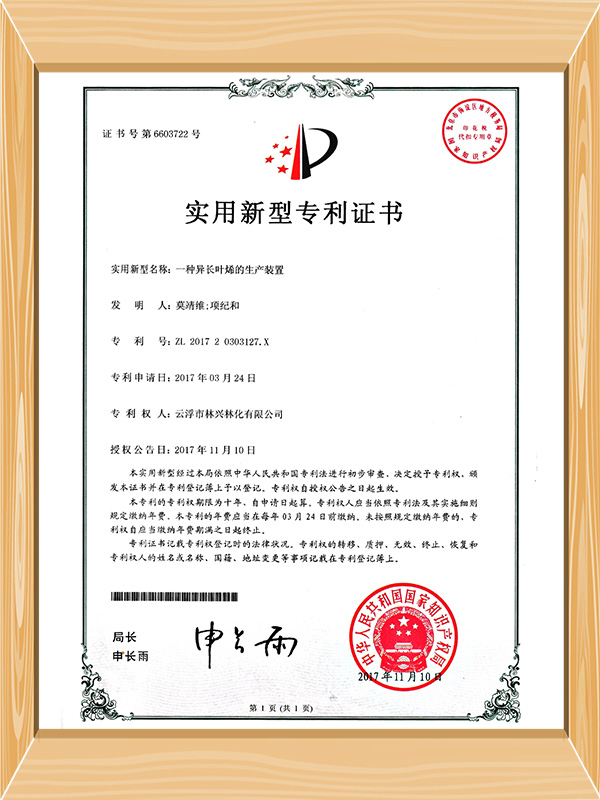
These three rules point to reliable, scalable choices — and in practice, many formulators find that a transparent supplier who can back analytical claims and offer consistent lots solves more problems than the lowest price. For practical sourcing and consistent technical documentation, Linxingpinechem often fits naturally into that workflow. —