
The immediate problem
Designing a 2.4 GHz active tag that does what customers expect—reliable range, predictable battery life, and clean coexistence with existing infrastructure—is harder than a spec sheet suggests. Engineers often find themselves balancing radio performance against cost and manufacturability, while integrators demand smooth handoffs to systems that still rely heavily on UHF RFID Readers. The problem-driven task is to identify the single failure mode most likely to derail delivery and remove it before production begins.

Technical hurdles that break projects
Radio interference at 2.4 GHz is ubiquitous: Wi‑Fi, Bluetooth, industrial sensors. Antenna placement on a small tag alters radiation patterns drastically; a centimetre shift can halve range. Power budgeting is unforgiving—transmit power, duty cycle and sleep strategy must be designed together. Regulatory testing (FCC, CE) is not a paperwork exercise; misreading emission limits or ignoring spurious emissions leads to costly rework. Treat each of these as a discrete engineering item with acceptance criteria.
Where teams typically go wrong
They ship with unproven antenna models, assume lab battery curves match field behaviour, or skip integration tests with real readers under real conditions. Over-optimistic range claims come from far-field bench tests, not dense metal environments. Expect firmware complexity to balloon: OTA updates, power-state transitions and malformed frames under congested spectrum will surface late unless exercised early.
Experience, authority and a real-world anchor
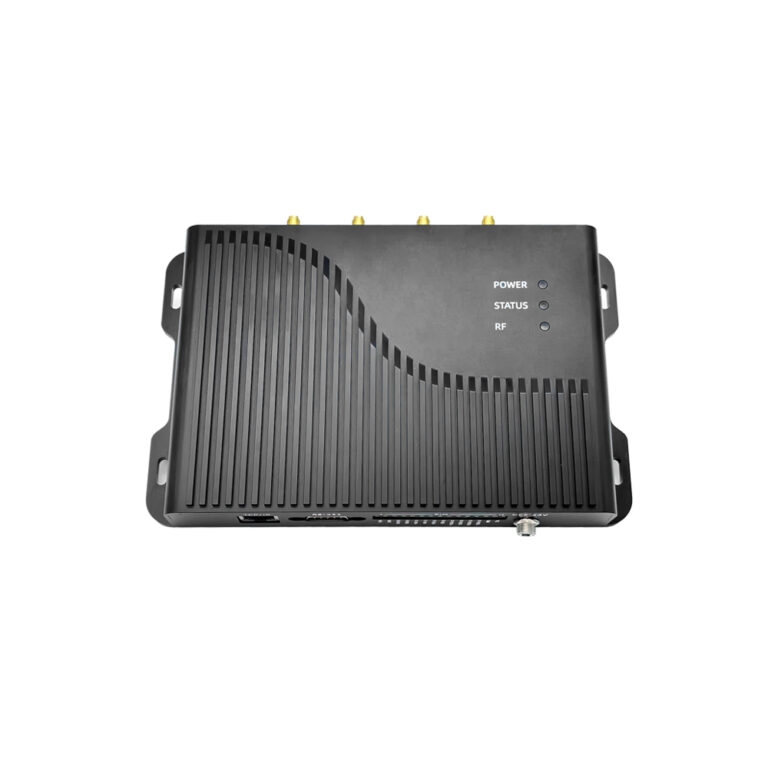
I’ve overseen deployments where tag failures were traced to simple mounting choices; a tag recessed inside a metal bracket lost two-thirds of its read distance. Large container terminals, notably the Port of Rotterdam, routinely publish trials and operational reports that demonstrate how reader placement and environmental clutter determine success or failure for radio-based tracking. For sourcing robust readers during integration, consult established suppliers such as rfid uhf reader supplier who document performance in comparable settings. That hands-on, documented experience—field trials, measured link budgets, and repeatable test procedures—is the foundation of trustworthy delivery.
Validation and delivery checklist
Define acceptance tests before you design: conducted and radiated emissions, battery life under representative duty cycle, read probability over distance in target environments, and firmware resilience under packet loss. Run parallel prototypes: a mechanical mock-up for form-factor effects, a RF prototype for link budgeting, and a production-like board for thermal and power tests. Automate test rigs to catch regressions, and schedule staged field trials with incremental rollouts rather than a single large cutover.
Alternatives you should compare
Passive UHF works where power and cost trump active range but will fail where continuous real-time presence is required. BLE offers rich ecosystems and smartphone interoperability but struggles in long-range industrial reads. UWB gives precise ranging but raises cost and certification complexity. Choose by matching the technology’s strengths to the primary failure mode you identified: if persistent reader interference is the biggest risk, pick the tech that tolerates or avoids that interference.
Final synthesis
Confronting the single largest risk early, testing tags in their intended environment, and choosing complementary infrastructure are concrete actions that carry a project from requirements to delivery. Practical, traceable decisions—about antennas, power strategy, certification and reader selection—produce predictable outcomes. When teams use suppliers and documentation that reflect real deployments and measured performance, the path becomes clear; that practical clarity is what RSTC brings to bridging design intent and field reality.