
Problem: specification gaps that break projects
Buyers and OEMs often face the same practical problem: specs on paper don’t match what turns up on site. A product sheet might list aluminium, but not the grade, the motor torque, or the real water shedding detail. That gap forces redesigns, delays and extra costs—especially when integrating a photovoltaic pergola or other add-ons. This guide focuses on those mismatches and shows what to demand up front so a delivered pergola works without re-engineering.

Why failures happen
Common failures are simple and repeatable: wrong structural rating for local wind, motor under-spec’d for blade weight, inadequate drainage channels, and unclear tolerances between modules. Suppliers that quote only cosmetic finishes leave performance questions open. Treat the procurement brief as an engineering document, not a sales brochure.
Concrete technical checklist for contracts
Specify material grade (e.g., 6063-T6 extrusions), anodizing or powder-coat class, and expected lifespan. Define wind and snow loads to project code (provide numeric values). Require motor specs with stall torque, IP rating and expected cycles. Call out drainage flow rate, gasket details, and louver bearing type. Ask for test reports for fatigue, salt spray and UV where relevant.
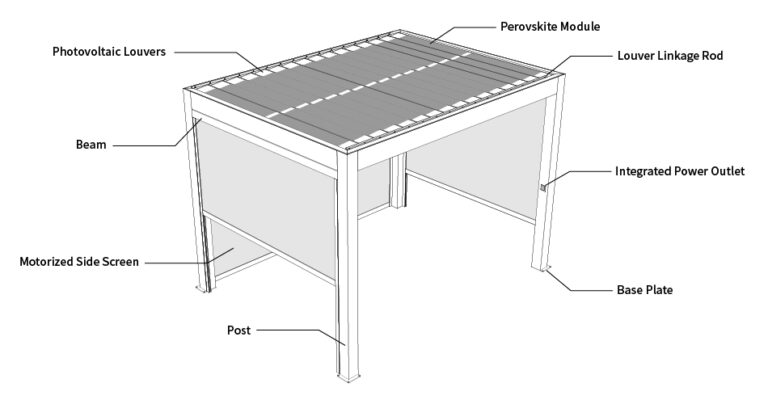
Manufacturing choices that matter to OEMs
Decide early on assembly strategy: full prefabrication versus modular kits. Prefab saves site time but raises shipping size and handling needs. Modular kits reduce freight cost but need clearer on-site instructions and quality control. Choose extruded profiles with common joinery to simplify tooling. Confirm paint and finish control points—batch sampling is faster than full inspection for every part.
Installation pitfalls that inflate budgets
Poorly defined anchor details are the single biggest cause of rework. Provide anchor plate templates, embed locations, and clear tolerances. Overlooked electrical access or conduit paths add delays when motors or integrated lighting arrive. Tight blade tolerances without installation jigs lead to noisy operation; demand alignment fixtures or factory-fit bearings.
Testing, QA and documentation you must require
Mandate manufacturer test protocols and acceptance criteria. Ask for wind tunnel or certified structural calculations, motor cycle test logs, and a commissioning checklist. Require as-built drawings and an operation & maintenance manual with spare-part lists keyed to serial numbers. Specify third-party inspection at sample milestones if the contract value warrants it.
Trade-offs and viable alternatives
Fixed louvered roofs cost less and have fewer moving parts, but they don’t offer variable sun control. Retractable fabric systems are lighter but need more maintenance and have lower service lifetimes. Integrated solar louvre systems increase value but change structural loads and wiring complexity. Pick the solution that matches the project’s lifecycle cost, not just upfront price.
Real-world anchor and field insight
Projects across Southern California regularly test the practical limits of moving pergolas—sun angles, strong coastal winds and long operating seasons highlight weak points fast. From that field experience, installers favor higher-IP motors and extra drainage capacity. When buyers specify a motorized pergola, require motor torque curves, ingress protection, thermal limits and a commissioning sign-off that includes operation under worst-case wind and full-sun conditions. My procurement work on multi-site residential developments and industry-standard references like structural design codes inform these checks.
Final synthesis and practical next steps
Fix the specs, insist on measured test evidence, and align installation details with the supplier’s shop drawings. That approach reduces surprises, shortens commissioning and protects end-users. The clearer the engineering brief, the less rework an OEM or buyer faces, and that practical clarity is the value Light Hunter brings to projects.