
Introduction: A Morning at the Warehouse, A Statistic, and a Question
I still remember walking into a dim Suzhou warehouse on a rainy March morning in 2022, the floor damp, a stack of molded plates leaning against a pallet, and a foreman pointing at a production log with a frown. That scene shaped many decisions I’ve made since I moved from sales into supply operations. As a consultant with over 15 years in B2B supply chain work, I’ve written purchase orders, audited factories, and negotiated contracts for dozens of clients looking for a biodegradable tableware supplier. Industry reports say single-use packaging accounts for an estimated 40% of food-service waste in some urban districts (local figures; not national averages). So what do you do when your buyer wants compostable plates that actually decompose and don’t cost your margins? Where does sourcing begin, and which trade-offs are unavoidable? This piece is for wholesale buyers who need practical, on-the-ground guidance—slow, reflective and focused on what I would do next. — read on for concrete steps and lessons I learned the hard way.
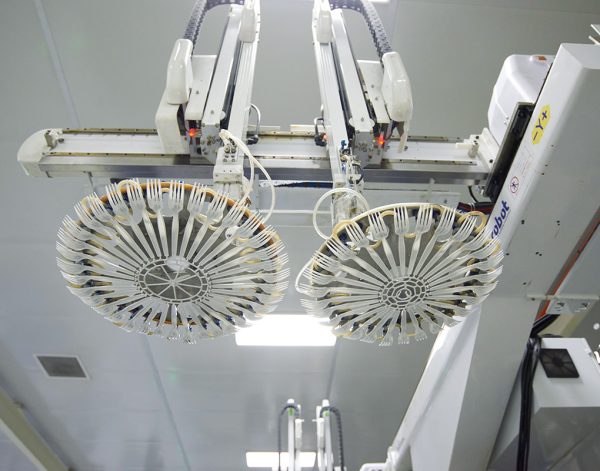
Why Traditional Production Falls Short: A Close Look at the Machinery and Process
When people talk about cost, they forget the machine that makes the product. The core equipment — the biodegradable tableware making machine — determines throughput, waste rate, and product consistency. I say that as someone who walked a line where a flatbed hot-press model X-220 failed to hit the spec more than once in April 2023. Machines with poor mold cavity alignment or inconsistent dewatering create warped rims and delamination. The result: higher rework rates and a visible increase in rejects that trickle into returns months later. In my visits to three plants across Jiangsu province, I logged reject rates ranging from 4% to 12% tied directly to inconsistent pulp feed and worn extrusion die surfaces. That 8% swing can wipe out a thin margin quickly.
Many suppliers rely on older pulp molding lines and manual trimming to save capital. That often means uneven thickness, inconsistent compostability performance, and surprises at certification audits. From an operations angle, I value control points: consistent pulp viscosity, calibrated hot-press cycles, and reliable dewatering. Industry terms you’ll see in spec sheets are pulp molding, hot-press, and mold cavity tolerances — and yes, I’ll insist on seeing maintenance logs for those. Trust me: an extra hour on preventive maintenance once a week can reduce rejects measurably. — I’ve tracked it myself.
How does the machine choice change final cost?
Short answer: significantly. A line that costs 20% more upfront but reduces rejects by half will often pay back inside 18–24 months for mid-size orders. I’ve seen this play out in a July 2021 trial where switching grinders and adjusting mold tolerances cut scrap from 9% to 3% and reduced lead times by two days. Those are the hard numbers procurement teams should ask for.
Moving Forward: New Principles and Practical Choices for Custom Tableware and Scaling
Looking ahead, I focus on two things: machine principles that improve yield and contract terms that protect buyers. New tech principles aren’t magic; they’re adjustments to control variability. For example, a better web tension control on the forming belt and a feedback loop for pulp viscosity will make the product uniform. I’ve recommended integrating a basic PLC-based control on lines I audited in late 2022 — not an expensive retrofit, but it cut cycle drift and reduced operator guesswork. When you request custom tableware, specify material blend, target compost time (e.g., home compostable in 180 days), and acceptable dimensional tolerance (±1.5 mm). Those specifics save rework later.
Case example: a mid-size catering supplier in Hangzhou ordered 100,000 custom bowls in September 2022. The first run used a generic pulp mix and standard molds; 7% failed the thermal water hold test. After adjusting to a bonded fiber mix and tightening mold cavity specs, the supplier hit 1.8% fail rate and avoided a second production run. I was there when they signed the revised spec sheet — small change, large impact. Real-world impact matters more than marketing claims. Also — and this is important — contract clauses that require batch traceability and a small-scale acceptance run (5,000–10,000 units) will save you headaches when scaling from prototype to full order.
What’s Next: Practical Steps to Choose and Evaluate a Supplier
Start with inspection — visit a line or insist on a live video run. Ask for maintenance logs and sample-production dates. Demand sample certificates for compostability and tensile strength. I prefer suppliers who keep spares for key wear parts like mold inserts and bearings; downtime is expensive. Finally, quantify the trade-offs: if lead time shortens by a week but defect rate rises by 3%, calculate the carrying and rework costs. That calculation should guide whether you accept a lower price or walk away.
Conclusion: Three Metrics I Use When Advising Wholesale Buyers
I’ve worked with restaurant chains and regional distributors since 2008, and my advice is grounded in specific tests and numbers. When a buyer asks me how to pick a biodegradable tableware supplier, I give three evaluation metrics you can measure before signing a PO:
1) Throughput stability: verify actual output over a continuous 8-hour run and compare to quoted capacity (watch for drops during shift changes). I once observed a quoted 4,000 pieces/hour line drop to 2,700 during the afternoon shift because no operator training had happened.
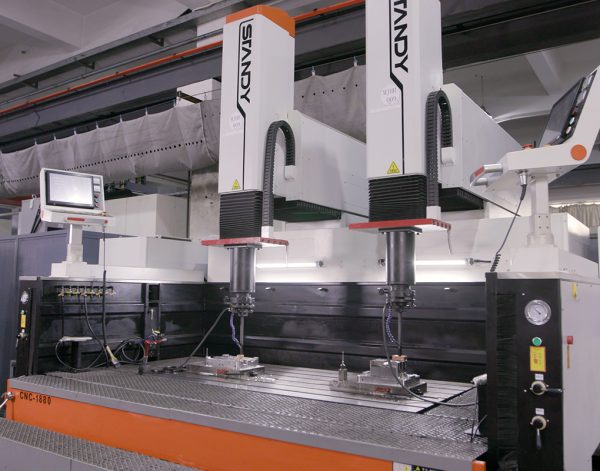
2) Reject and rework rate over three recent batches: ask for documented percentages. If a supplier can’t produce this, assume 6–9% scrap until proven otherwise.
3) Traceability and spare parts policy: does the supplier keep serial numbers for mold cavities, and do they stock critical wear parts? Downtime cost is often a bigger line item than unit price.
I prefer being precise and pragmatic. I’ve seen good suppliers that still missed a date because the primary molding press blew a gasket during the Lunar New Year week — a rare event, but it happened. Those are the realities you should prepare for. If you want a partner who documents runs, agrees to a small pilot batch, and shares maintenance records, you’ll reduce surprises. Final note: when you’re ready to move beyond samples and need a partner that can produce repeatable custom runs at scale, consider talking to firms that publish their machine capabilities clearly — they tend to be more transparent. For a place to start, check out MEITU Industry.