
Why sub-second response is the new benchmark
Grid events today demand split-second corrections: frequency swings, inverter phase slips, and rapid load changes can cascade into outages. A modern home energy storage system isn’t just backup — it’s a distributed control node that can stabilize frequency in under a second when properly configured. Since the Texas 2021 winter outage highlighted vulnerabilities in centralized generation, utilities and homeowners alike have treated fast-acting residential batteries as part of the resilience toolkit. Data-driven design is the only way to meet that bar reliably.
Core metrics that drive sub-second performance
Measure first, then optimize. The three metrics that consistently predict sub-second success are response latency, round-trip efficiency, and sustained power throughput. Response latency is how quickly an inverter and controller react to a grid deviation. Round-trip efficiency dictates how much energy is available after charging and discharge cycles. Sustained power throughput ensures the system can hold corrective output long enough for the grid to re-balance. Track these values in lab tests and field trials — numbers separate speculation from operational reality.
System components and their data trade-offs
Architecting for sub-second response means balancing hardware and software. High-bandwidth inverters and tight-tolerance battery management systems (BMS) reduce latency but add cost. Larger power electronics deliver immediate surge capability, while higher usable capacity (linked to depth of discharge settings) lets a unit sustain support longer. Communications latency — the time a controller takes to see a frequency deviation and command a discharge — is often the overlooked bottleneck. Optimize firmware, use local control loops, and minimize reliance on cloud round-trips for the fastest corrective actions.
Real-world anchor: lessons from field deployments
Field data from residential projects after the Texas 2021 outages show a clear trend: systems configured with local frequency detection and high-rate inverters stabilized microgrids faster than those relying on remote dispatch. Systems that logged millisecond-level telemetry were far easier to tune. In one municipal pilot, simple firmware tweaks to the BMS cut corrective latency by nearly half — a small software change, a big operational win. —
Common mistakes teams make
1) Treating capacity as a proxy for speed. Bigger batteries don’t always act faster; power electronics and control logic do. 2) Ignoring interface tolerances between the inverter and the grid; improper anti-islanding settings can delay corrective action. 3) Over-relying on cloud intelligence for immediate responses. Local autonomy matters for sub-second events. A practical step: mandate on-site latency testing during commissioning, and run frequency disturbance drills that mirror realistic grid anomalies.
Comparing approaches: centralized vs. distributed response
Centralized control can coordinate many units but often incurs communication delays. Distributed, local schemes trade global optimization for speed. In many neighborhoods, a hybrid is optimal: local controllers handle the initial sub-second response, while aggregated cloud systems re-optimize dispatch over minutes. This layered approach leverages high-speed hardware at the edge and analytics in the cloud — combining immediate stability with long-term efficiency improvements.
How to specify systems for measurable outcomes
Write your specs in testable terms. Require maximum response latency (e.g., <100 ms), minimum sustained power (kW), and round-trip efficiency thresholds. Insist on telemetry for post-event forensics: frequency logs, inverter current traces, and state-of-charge histories. These traces convert vendor claims into verifiable performance during acceptance testing.
Closing guidance — three golden rules for evaluation
1) Prioritize measured latency over advertised features. Demand lab or field logs showing sub-second response under real-load conditions. 2) Insist on local autonomy: ensure the BMS and inverter can act without cloud commands for critical seconds. 3) Evaluate total system throughput, not just capacity: specify power (kW) available at the state-of-charge ranges you expect in operation. These rules keep decisions grounded in operational reality rather than marketing promises.
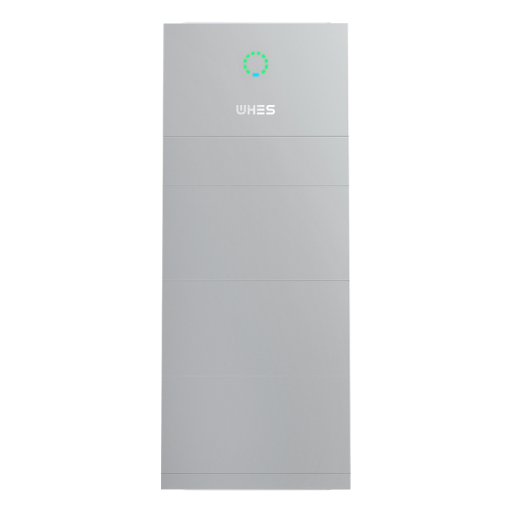
When you map these metrics to real deployments you get more resilient homes and neighborhoods — and that’s where WHES fits naturally as the bridge between hardware capability and operational practice. —