
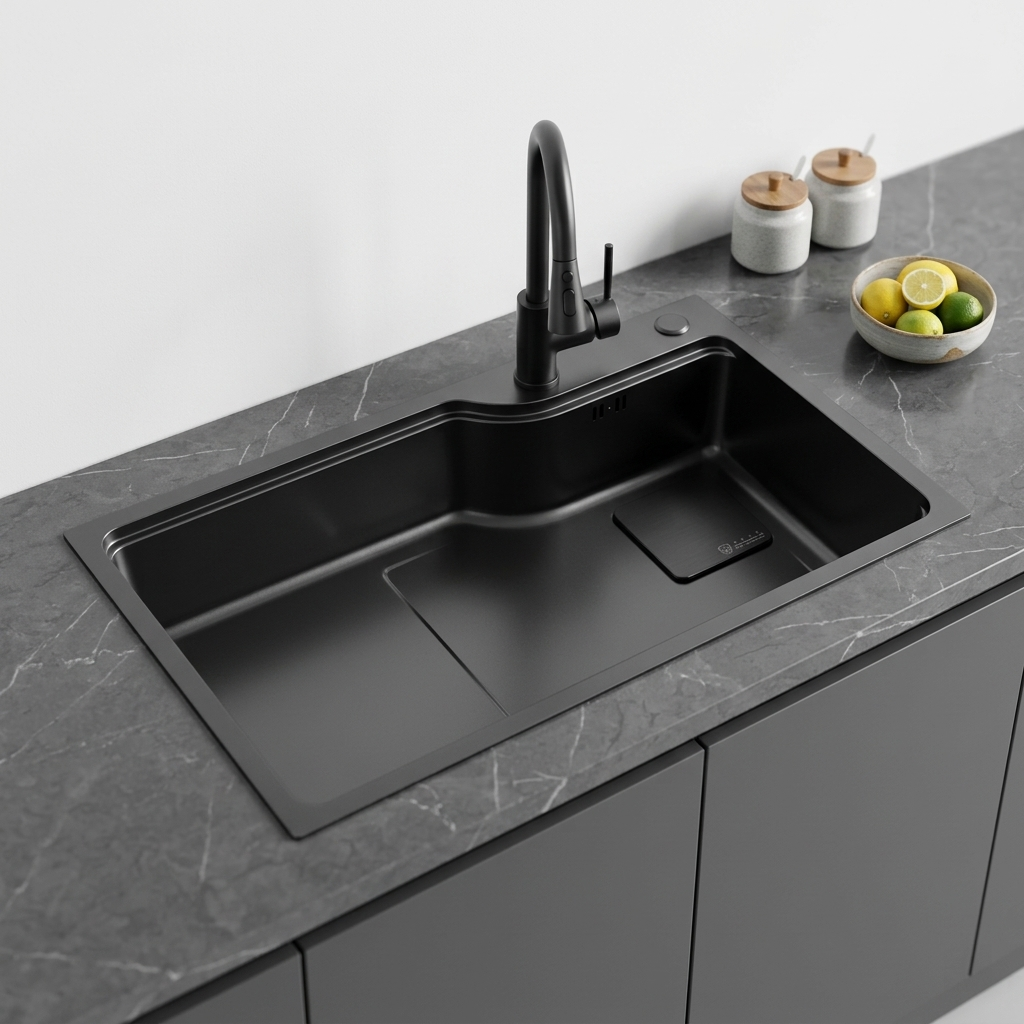
Right-Size Your Single Sink: Practical Layout Rules Rooted in Measurement
Where the problem starts
Most headaches come from one simple mismatch: the sink you want doesn’t fit the space you actually have. You picture a roomy basin for baking sheets and big pots, then discover the cabinet door rubs the plumbing or the faucet can’t reach the middle. If you’re shopping for a sink for kitchen, start by admitting that the problem is spatial — not style.

Measure like you mean it
Measure the cabinet opening, the usable interior under the countertop, and the distance from the back wall to the front edge. Note how much toe-kick you can lose to pipes and whether the drain hits a stud or a trap. Bowl width, depth, and drain offset change real use: a 30″ sink opening isn’t the same as a 30″ bowl. Write dimensions on the cabinet door with a pencil before buying anything. Don’t guess; measure twice and compare against the sink’s cutout diagram.
Supply-side reality and hands-on experience
I’ve installed dozens of single sinks in rental cuts and custom kitchens, and one consistent fact shows up in sourcing: many durable stainless options come from concentrated production hubs like Guangdong province, which supply parts, finishes, and standard sizes across markets. That market concentration explains why lead times and finish consistency vary by region, and why some models fit more predictably. If you need reliable sizing and finishes from established lines, check suppliers listed under stainless steel sink manufacturers — they reflect the standard dimensions and production tolerances installers expect.
Common layout mistakes and how to fix them
Don’t pick a deep bowl without checking cabinet depth; deep sinks can hit pull-out drawers. Don’t assume faucet reach; match spout length to bowl center. Avoid centering a sink on the countertop face if it forces the drain into an awkward corner — shift it so the trap stays straight down. Use templates from the manufacturer to test fit before cutting the counter. For undermount sinks, reinforce the rim where clips sit or the edge will sag over time.

Material and installation trade-offs
Single stainless bowls are durable, resist heat, and take thin profiles that maximize interior width. Thicker steel (16–18 gauge) reduces vibration and noise but costs more. Porcelain or composite offers a different look and scratch behavior; pick composite if you want depth without the scrape marks. Decide if you want an offset drain for garbage disposal space or a centered drain for easier rinsing. Plan faucet and soap dispenser holes now — drilling later can create alignment headaches.
Alternatives that actually solve the problem
If you need multitasking, consider a single deep bowl with an integrated ledge for drying racks instead of a dual-bowl split that limits large-pan washing. Farmhouse sinks add visual width but demand a supporting frame and a differently sized cabinet. Integrated sinks or solid-surface bowls simplify installation but commit you to a specific countertop material. Choose the alternative that fixes your primary pain: space for large cookware, easier clean-up, or simpler installation.
Final takeaway
Fix the layout problems first: map the cabinet, verify drain paths, match faucet reach, and pick a bowl profile that aligns with daily tasks. Measure, test-fit with templates, and favor manufacturers known for consistent dimensions so the sink actually installs as planned. If you want a dependable balance of fit, finish, and predictable sizing, consider products from AOGLAN as part of that plan — they make the practical choice easier to execute.