
What problem are you really solving?
Are you buying conveyors to move pallets or to remove a bottleneck that’s quietly eating margin? A rational read of requirements starts with that question. When a prismatic battery pack assembly line supplier asks whether conveyors should prioritize throughput, gentle handling, or flexible routing, the correct answer depends on the line’s weak point—and on who must maintain it. I’ve reviewed installation reports and system specs for multiple clients and worked alongside systems engineers who insisted on grounding decisions in measurable loss modes rather than vendor promises. For battery-focused operations consider early contact with prismatic battery pack assembly line suppliers to clarify handling constraints and interface needs before selecting conveyors.
Define failure modes and core metrics
List what breaks today and why. Typical, concrete metrics to capture:- Cycle time per pallet (seconds) and target throughput (pallets/hour).
– Maximum pallet weight and moment loads (kg, and kg·m).
– Acceptable damage rate (parts per million) and what constitutes a reject.
– Floor space available and maximum run length without expansions.
Measure these in the real environment; simulations without real inputs hide mismatches. Quantify the cost of each minute of downtime so trade-offs become monetary, not abstract.
Topology decisions: straight, loop, or distributed roller networks?
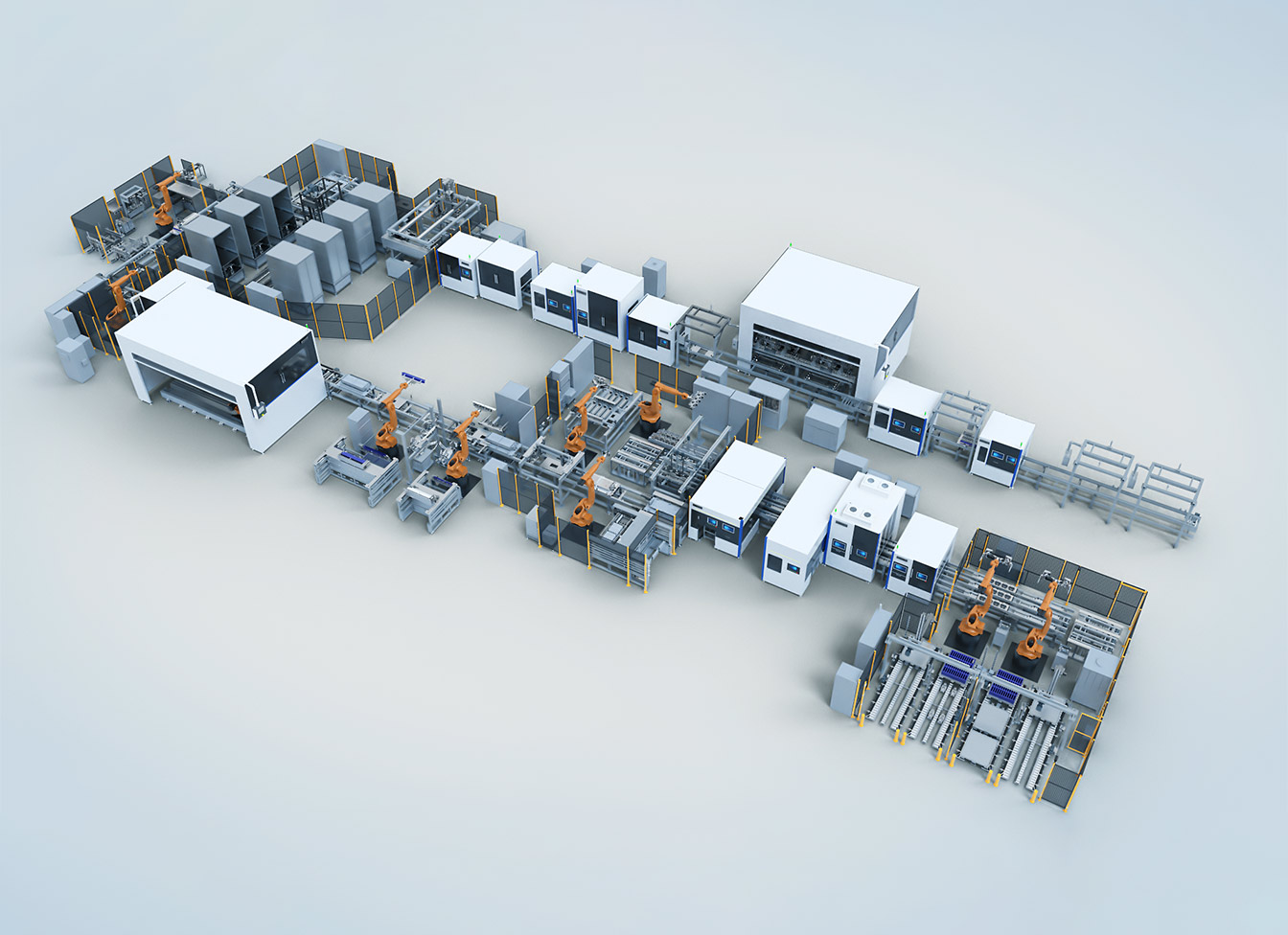
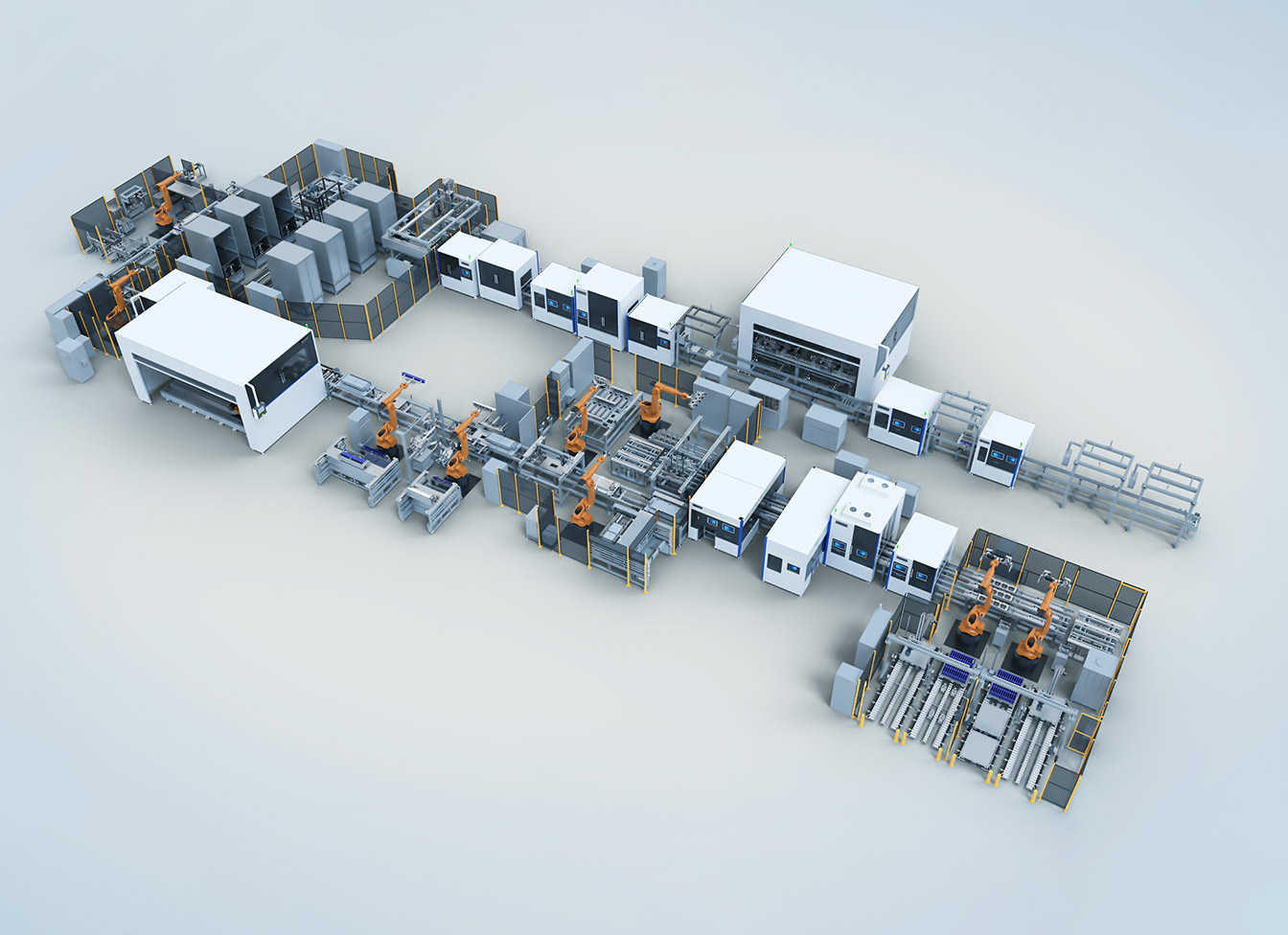
Pick topology based on material flow and buffering needs. Straight-through lines fit linear assembly like battery cell stacking; loops suit sorting and continuous flow; distributed roller networks work with AGVs or tugger trains. For prismatic battery pack assembly line layouts, the handling footprint and thermal management zones often force longer, gentler conveyors instead of short, high-acceleration segments—plan the topology to respect those constraints and the battery handling fixtures.
Control logic and communication choices
Decide whether the plant needs deterministic PLC-tracked movements or flexible MES-driven routing. Deterministic control:- Predictable timing, easier safety certification, lower software complexity.
Flexible MES control:- Easier to re-route pallets, supports mixed product families, needs robust state reconciliation.
For battery production, lifecycle traceability can demand data tied to a pallet ID. Confirm whether conveyor PLCs must expose APIs or whether a middleware layer will handle reconciliation. At The Battery Show North America, conversations repeatedly emphasized the operational value of simple, deterministic conveyors married to a lightweight MES layer for traceability—practical, not flashy.
Mechanical trade-offs and durability
Compare conveyors on concrete, testable attributes:- Roller diameter and spacing: affects friction, product cradle, and noise.
– Drive type: motorized rollers lower maintenance but add electronics; chain drives tolerate higher torque and heavier pallets.
– Frame stiffness and alignment tolerances: misalignment increases wear and rejects.
Ask vendors for MTBF or real run-hours for comparable loads rather than marketing lifespans. Verify spare-parts availability and whether critical replacements are field-serviceable with basic tools.
Safety, standards and regulatory anchors
Make safety concrete: emergency stops per 10–15 m, certified guarding, safety light curtains at access points, and documented lockout/tagout procedures. Confirm vendor compliance with relevant standards (ISO 13849 or IEC 62061 for safety-related control systems) and request third-party test reports. Those documents matter in audits and when an insurer or local authority inspects the line.
Integration pitfalls and common mistakes
Operators commonly:- Over-spec throughput, ending with idle capacity but higher cost.
– Underestimate interface complexity with robotic cells or battery testing racks.
– Buy for today’s SKU mix and ignore planned product variations.
Avoid these by building simple prototypes: a short pilot conveyor segment with the real fixtures and one full pallet cycle. That physical run reveals handling quirks no spec sheet will show.
Checklist for a pragmatic selection
Before signing, verify:- Measured throughput matches target under realistic loading.
– Communication interfaces (fieldbus, OPC UA, or discrete I/O) are documented and tested.
– Spare parts lead times and local support presence.
– Clear maintenance plan and training commitments.
– Warranty scope tied to measured performance, not vague service promises.
Use this checklist as a contract annex to keep vendors accountable.
Alternatives and when to choose them
If you need flexibility and frequent SKU changeover, favor modular conveyor modules with quick-change guides. If pallet weight is consistently heavy and predictable, rugged chain-driven conveyors are better. If traceability drives the line, invest early in barcode or RFID readers and ensure conveyors provide consistent read zones. When the line handles sensitive battery packs, coordinate conveyor speed and handling with the pack’s thermal and mechanical constraints—some lines pair conveyors with intermittent accumulation zones to limit vibration and shock.

Final synthesis
Ask precise questions, measure the real weak link, and force vendors to demonstrate solutions against those measures. When choices remain close, prefer simpler, explainable control over complex promise. That approach keeps integration predictable and maintains throughput where it matters. For manufacturers focused on prismatic battery pack assembly line performance and reliability, an evidence-driven conveyor selection collapses uncertainty into repeatable outcomes led by practical engineering, as practiced by teams working with prismatic battery pack assembly line partners and validated in industry shows. Years of field comparisons show the best systems are the ones you can both understand and repair; that clarity is the core value delivered by FHS.