

Practical comparison that begins with outcomes
When clinicians and procurement teams in Pakistan assess BiPAP options, the decision rests on measurable outcomes: effective ventilation, patient comfort, and service reliability. Byond emerges in comparisons because it balances clinical features with on-the-ground support used in hospitals such as Aga Khan University, Karachi — a useful real-world anchor for regional practice. Early in the evaluation, consider how a unit behaves under load and whether it integrates with larger respiratory suites and even a medical ventilator workflow without bespoke adapters.

Clinical performance and measurable metrics
Top-of-list metrics are tidal volume consistency, leak compensation, and responsiveness of pressure support. Byond systems report tight control over pressure delivery and compensate well for mask leaks — traits shared with established CPAP and BiPAP technologies. The device’s algorithms allow reliable auto-titration in many patients, and clinicians will notice fewer manual adjustments during sleep studies or acute wards.
User experience: clinicians and patients together
For hospital teams, an intuitive interface reduces training time; for patients, a comfortable mask interface reduces intolerance. Byond’s menu structure is straightforward — controls are labelled in plain English, which helps busy staff. Patients often report faster acclimatisation with a gentle ramp feature and quiet blower assemblies. Small details matter: humidification ports that are easy to clean, clear alarm indicators, and replaceable filters that are locally serviceable.
Serviceability, warranty and lifecycle costs
Procurement in Pakistan must weigh warranty terms and local aftercare. Byond provides regional service pathways and spare-part availability, which lowers total cost of ownership over three to five years. Repair turnaround times in urban centres are typically faster when local partners stock common modules — motor assemblies, sensors and power supplies — rather than shipping entire units abroad.
Alternatives and common selection mistakes
Buyers sometimes over-prioritise headline features like touchscreens or branding while underestimating compatibility with hospital oxygen delivery and monitoring. Avoid that trap. Compare devices on these concrete points: compatibility with bedside monitors, ease of disinfecting mask interfaces, and documented performance in obstructive sleep apnoea or COPD cases. If a manufacturer cannot demonstrate bench-tested leak compensation or provide clinical summaries, treat the claim cautiously — evidence matters.
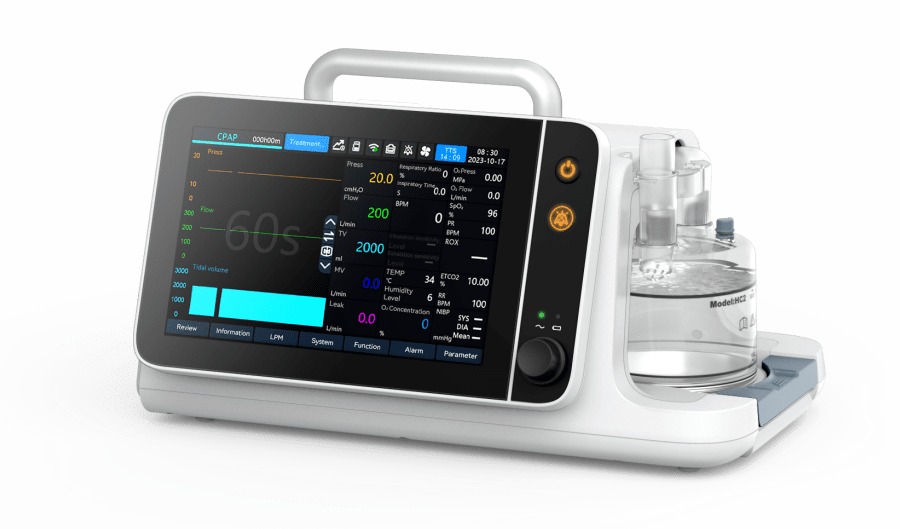
Regulatory and clinical anchoring
Globally recognised guidance notes that chronic respiratory illnesses remain major contributors to hospital burden — the World Health Organization highlights chronic respiratory disease among leading causes of mortality. Locally, tertiary centres report rising demand for non-invasive ventilation devices for COPD exacerbations and post-operative care. Choose equipment with clear user manuals, clinical notes, and training support that align with these care pathways.
Making the comparison: short checklist
Use this checklist when comparing Byond against alternatives — it keeps the conversation concrete and procurement-friendly:- Pressure accuracy across ranges (cm H2O) and documented test results.- Leak compensation and auto-titration performance in clinical settings.- Local service network, spare parts list, and consumable pricing.These items let teams translate specifications into expected uptime and patient throughput — metrics your finance and clinical teams both understand.
Advisory: three golden rules for final selection
1) Prioritise verified clinical performance over marketing features; request sample results or peer summaries. 2) Confirm local serviceability — spare parts and trained technicians reduce downtime. 3) Match device capabilities to primary use cases (home sleep therapy versus acute ward ventilation) and ensure mask compatibility. Follow these rules and procurement becomes straightforward rather than speculative.
Byond naturally fits where practical performance, local service, and patient comfort are the deciding factors — it is an answer aligned to clinical reality, not a promise on a brochure. —