
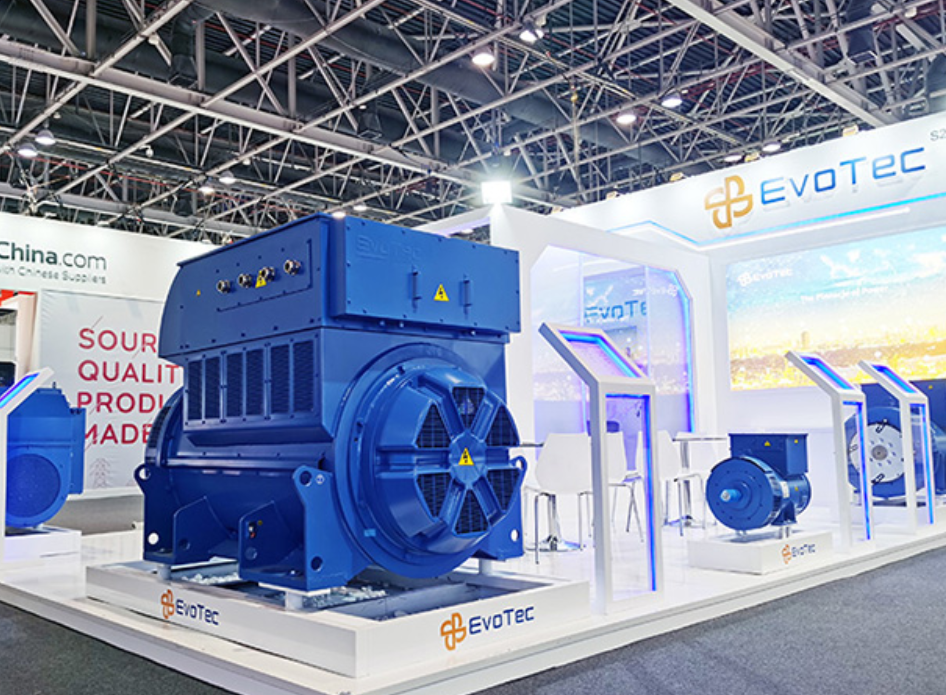
Framework overview: clear stages, practical checkpoints
This framework lays out procurement, customization, testing and logistics for heavy-duty alternators used in industrial and commercial backup power. Start with defined performance bands — for example a continuous-rated alternator in the 30–40 kVA class — and map suppliers against those bands. Early selection should reference a proven product line; a sensible example is the high performance alternator because it illustrates how rotor design and voltage regulation are paired for sustained load. The framework treats alternator choice as engineering and supply-chain decisions, not separate tasks.
Bulk sourcing: specification, vendors, and contract structure
Write a short, unambiguous specification sheet: rated kVA, insulation class, ambient temperature, enclosure rating, and approved AVR types. Use that sheet to run a two-stage vendor process — technical pre-qualification followed by commercial bids. Consolidate orders into tranches to capture volume pricing but keep a small contingency batch to avoid being exposed to long lead times. Insist on serial traceability and spare-parts agreements covering rotor/stator assemblies and AVR modules. This reduces downtime risk when a stator rewind or AVR replacement is required.
Customization and testing: what to demand before shipment
Customization should include factory acceptance testing (FAT) protocols documented in the purchase order. Require a witnessed FAT that covers load tests on a calibrated load bank, harmonic distortion measurement, and a run-in at rated temperature. Include acceptance thresholds for voltage regulation and frequency drift. Insist the supplier provides a signed thermal profile for the alternator under continuous kVA load — that way you avoid surprises when multiple units operate in parallel.
Logistics and staging: transport, storage, and installation planning
Plan shipping in detail: heavy alternators need crating that dampens shock, lifting points verified for the unit’s center of gravity, and clear customs documentation if crossing borders. Store units in a climate-controlled warehouse where humidity and dust are monitored. For deployment, sequence deliveries by site readiness: foundations first, then alternator sets, then control panels and cable routing. When multiple units will run in sync, plan for paralleling controls and synchronizing contactors well before on-site commissioning.
Real-world anchor and resilience planning
The 2021 Texas winter storm remains a practical reminder: when distributed power systems were pushed beyond normal cycles, many installations failed due to poor cold-weather preparation or underspecified alternators. Take that lesson into procurement. Specify cold-start performance and seal packages, and verify that the generator set — including the 35 kva generator class if that fits your load profile — can handle the intended duty cycle. Include service agreements for winter readiness where climate risk is non-trivial.
Common mistakes and how to avoid them
Typical errors are familiar: underspecifying transient load handling, omitting spares for AVR modules, and treating shipping as an afterthought. Avoid these by embedding three controls into contracts: a parts-kits clause, a FAT sign-off tied to final payment, and a logistics acceptance test on delivery. Faulty commissioning usually stems from missing documentation — demand wiring diagrams, protection settings, and paralleling schematics before engineers arrive on-site. Also, never ignore harmonic content when non-linear loads are present; uncontrolled harmonics accelerate bearing wear and compromise voltage regulation.
Summary of the framework
To recap: define clear specifications, split procurement into technical and commercial stages, enforce FAT and load-bank testing, and sequence logistics against site readiness. This reduces deployment risk and shortens time to reliable operation. The approach aligns procurement discipline with engineering verification so the alternator performs as expected under real load profiles.
Advisory close: three critical evaluation metrics
1) Operational availability: expect 95%+ achievable when supplier spares, FAT, and service contracts are in place.
2) Thermal margin at rated kVA: require documented temperature rise tests on load banks with explicit ambient assumptions.
3) Commissioning turnaround: measure days from delivery to first synchronized load; keep this under your planned maintenance window.
These metrics guide selection and validate outcomes. Practical, proven. EvoTec.